
Turkey neck happens to almost everyone eventually. Learn what causes those bands and loose skin, and how a neck lift restores a firm profile.
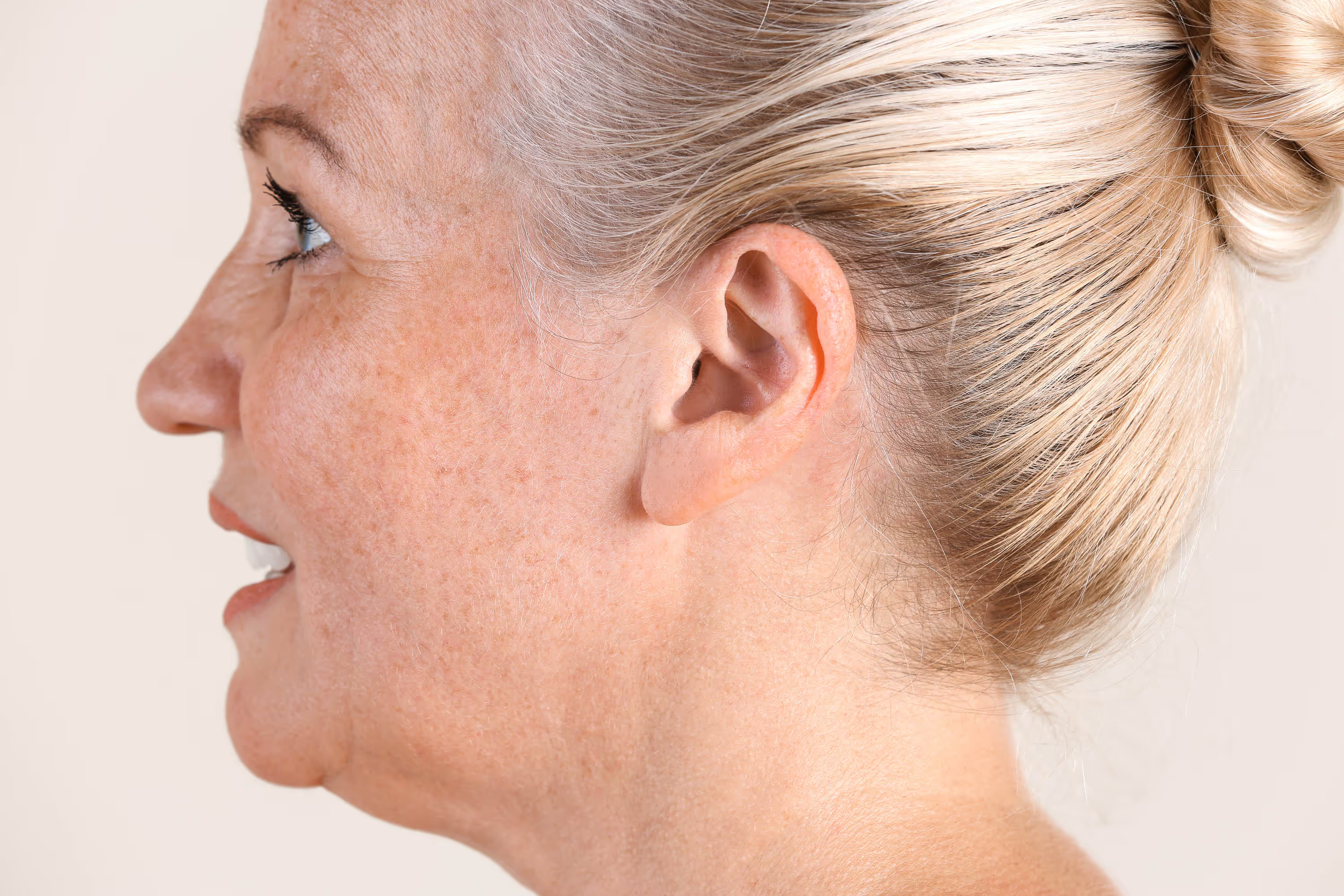
TLDR: Turkey neck, the loose, sagging skin and vertical banding under the jaw, is caused by three things working together, skin that has lost elasticity, a platysma muscle that has separated into cords, and sometimes fat beneath the chin. Creams and exercises cannot re-tighten separated muscle or shrunken elastin, which is why the definitive fix is a neck lift, often paired with chin liposuction, and why the neck is frequently the first place aging shows and the most satisfying place to correct it.
As with everything we publish, we will tell you plainly why this article exists. The neck is the concern patients apologize for bringing up, usually with a hand at their throat and a phrase like "I know it's vain, but." It is not vain, it is the most visible structure between your face and the world, and Twin Cities patients search for answers about it constantly. We wrote this to be the honest answer they find, and we hope that when you finish it, you will bring your neck, and your questions, to us.
Turkey neck describes the combination of loose, crepey skin and vertical cords that develops under the jaw and down the front of the neck. Three separate structures create it.
Neck skin is thin, has fewer oil glands than facial skin, and gets decades of sun that people faithfully protect their face from and forget below the jaw. Collagen and elastin decline with age, and the Mayo Clinic notes that sun exposure is the biggest accelerant of that decline. Once elasticity is gone, skin hangs rather than hugs, and no cream restores it.
The platysma is a broad, thin sheet of muscle running from the collarbones up over the jaw. In youth its two halves meet neatly at the midline. With age they separate and their edges tighten into the two vertical cords you can see when you grimace. Those bands are muscle, which is exactly why no skincare product has ever touched them.
Some necks also carry submental fat, which adds fullness above the loose skin. Whether fat is part of your picture changes the surgical plan meaningfully, and we wrote a full companion piece on the causes and fixes for a double chin for exactly that reason.
No, and we would rather lose the sale than pretend otherwise. Exercises can strengthen the platysma, but a stronger separated muscle is still a separated muscle, and some facial-exercise routines actually deepen banding by training the cords. Firming creams can hydrate the skin's surface and modestly improve texture, and that is the full extent of their honest résumé. Loose skin, separated muscle, and fat each require a physical correction, which is what surgery is.
A neck lift corrects all three structures in one operation. Through small incisions hidden behind the ears and, when needed, a tiny one beneath the chin, the surgeon stitches the separated edges of the platysma back together at the midline, a repair called a platysmaplasty, which eliminates the bands and rebuilds a firm muscular sling under the jaw. Excess fat is removed directly or with chin and neck liposuction. Then the loosened skin is re-draped smoothly and the excess trimmed, with the closure hidden in natural creases. The result is the clean, sharp angle between jaw and neck that photographs read as a decade or more of difference, and you can see exactly that in our before and after gallery.
It depends on whether the aging stops at your jawline. If your concern is truly the neck, banding, looseness, a soft jaw-to-neck angle, a neck lift alone answers it. If jowls have formed along the jawline and the midface has begun descending too, the neck and face are aging as one unit and are usually best treated as one, which is why the neck lift is the most common companion to the deep plane facelift. A face rejuvenated above an untreated neck is one of the telltale looks we work hard to avoid. We walk through how the deep plane approach handles the jawline in our complete deep plane facelift guide, and the honest answer for your anatomy takes one examination.
Most patients wear a soft supportive wrap for the first days, manage discomfort with minimal medication, and feel tightness rather than pain. Many return to desk work within a week to ten days, with visible bruising largely resolved by the second week. Swelling settles progressively, and the refined final contour emerges over the following months. Patients routinely tell us the neck was an easier recovery than they braced for.
Most of our neck lift patients are in their late forties through seventies, but anatomy decides, not age. Significant weight loss can bring turkey neck early, something we discuss in our article on facial changes after GLP-1 weight loss.
Because the correction is built on repaired muscle rather than stretched skin, results commonly last ten years or more.
Incisions hide behind the ears and under the chin, and in the hands of a facial specialist they typically heal into lines that are hard to find. Dr. Daniel Schneider is board certified in head and neck surgery with ABFPRS subcertification in facial plastic surgery, and the neck is, quite literally, half of his board certification.
Only if skin laxity is not part of your picture. Liposuction on a loose neck removes the filling and leaves the drape, which can look worse. The examination tells us which patient you are before anything is scheduled.
We opened by admitting we wrote this to earn your visit, and here is the close that makes it easy. Schedule your complimentary consultation at our St. Paul office, serving Minneapolis and the entire Twin Cities, and let Dr. Schneider show you exactly what is skin, what is muscle, and what is fat in your mirror, and what a neck lift would honestly change. No pressure, and no more scarves in July.