
A facelift is a facial procedure, so who should perform it? We explain why board-certified facial specialization matters for your face.

TLDR: A general plastic surgeon is board certified across the whole body, from breast reconstruction to hand surgery. A facial plastic surgeon trains exclusively on the head and neck, and the ABFPRS subcertification is the credential that proves it. Both are legitimate paths, and excellent surgeons exist in each. But when the operation is your face, the case for choosing the specialist whose entire training happened there is straightforward, and this article makes it honestly.
Full transparency before anything else. This article is published by a facial plastic surgery practice, so you know where we land before you read a word. We are writing it anyway because the credential landscape genuinely confuses patients, most articles about it are written to blur the distinction rather than clarify it, and you deserve to understand exactly what the letters after a surgeon's name mean before you let anyone operate on your face.
A general plastic surgeon completes residency training in plastic and reconstructive surgery covering the entire body and earns certification from the American Board of Plastic Surgery. Their training spans breast surgery, body contouring, hand surgery, burn reconstruction, and facial procedures. It is rigorous, respected training, and the American Society of Plastic Surgeons represents thousands of these surgeons doing excellent work. The honest observation is simply this. Facial surgery is one chapter of that training, not the book.
A facial plastic surgeon typically begins with a full residency in head and neck surgery, also called otolaryngology, spending five or more years operating exclusively on the anatomy of the face, head, and neck, including the facial nerve that every facelift must respect. Many then complete a dedicated fellowship in facial plastic and reconstructive surgery and sit for subcertification from the American Board of Facial Plastic and Reconstructive Surgery, the ABFPRS. That credential requires documented facial cases, rigorous examination, and peer review. A surgeon holding it has, in effect, spent their entire surgical education on the region you are asking them to rejuvenate.
For facial procedures, specialization matters in three concrete ways. First, repetition. A surgeon whose practice is exclusively facial performs facelifts, eyelid surgeries, neck lifts, and rhinoplasties week after week, and in surgery, repetition is skill. Second, anatomy depth. Advanced techniques like the deep plane facelift work in planes bordered by facial nerve branches, and head and neck surgeons trained in that anatomy for years before ever performing a cosmetic case. We explain why that matters for technique choice in our comparison of facelift methods. Third, aesthetic judgment. Seeing hundreds of faces a year builds an eye for what natural looks like, and natural is the entire assignment.
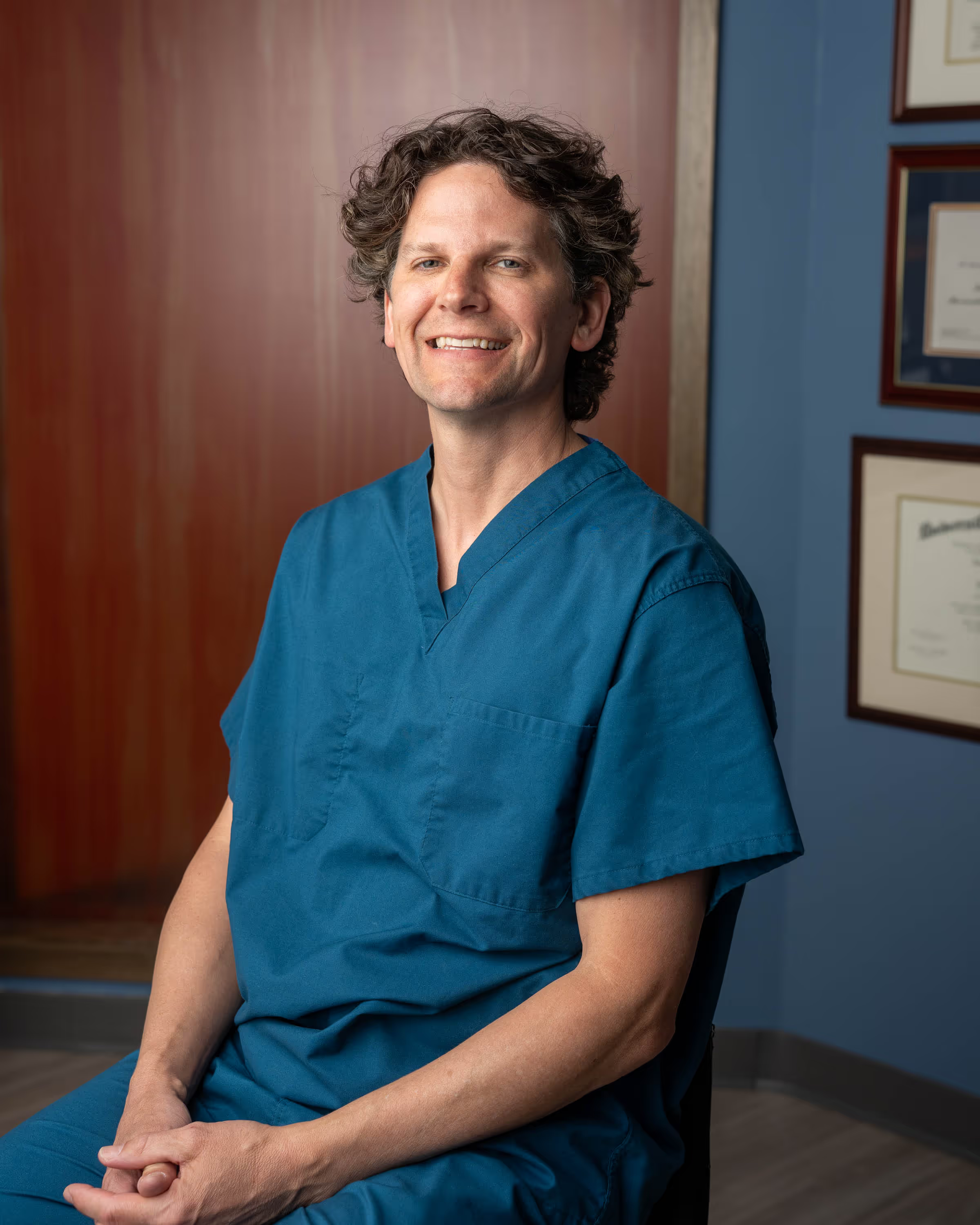
Verify, do not trust. Look the surgeon up on their certifying board's website, the ABFPRS and the American Board of Plastic Surgery both offer public verification. Confirm where they trained and whether a fellowship followed. Ask how many of your specific procedure they performed in the last year. Ask who does the operating, the surgeon or a rotating cast. And study their before and after gallery for faces like yours. Here is ours to hold to the same standard, our before and after results, and here is Dr. Schneider's background, board certified in head and neck surgery, ABFPRS subcertified, University of Minnesota trained, OHSU fellowship trained.
Riverview Facial Plastic Surgery is built on the specialist model. Dr. Schneider performs one surgery a day, four days a week, so the patient on the table has his complete attention, and our boutique St. Paul practice means you see the same faces from your complimentary consultation through your final follow-up. We are not the largest practice in the Twin Cities, and that is the point. If you want to see how we compare with the metro's other well-regarded practices, we published an honest roundup of the best facelift surgeons in the Twin Cities that names our competitors and links to them.
Yes. Facial plastic surgeons are fully trained surgeons certified through the head and neck pathway with subcertification specifically in facial plastic surgery. The training route differs from general plastic surgery, but for the face it is arguably the more concentrated route.
Absolutely, and many do. Our argument is not that general plastic surgeons produce bad facelifts. It is that when every year of a surgeon's training and every case in their week is facial, the odds tilt in your favor, and choosing your surgeon is fundamentally about tilting odds.
Ask what board certifies them and verify it. Ask how many facelifts they performed last year. Ask which technique they recommend for your anatomy and why. Ask to see healed results on patients your age. Any surgeon worth choosing welcomes every one of those questions.
We told you our bias at the start, and here at the end we will convert it into an invitation. If your face is the procedure, interview a facial specialist before you decide, even if you interview others too. Schedule your complimentary consultation at our St. Paul office, serving Minneapolis and the whole Twin Cities, and ask Dr. Schneider anything in this article to his face. He would genuinely enjoy it.